
MENU
MENU
Otillia M. Richmond, MH
The Human Nature of NEED and FEED - A Modern Treatise
There are still a few of us that may remember electricity, motor cars, deep wells, indoor plumbing, and telephones as novelties. Now, less than a century later, major expenses considered necessary and assimilated into basic human needs.
Human tendency is to embrace all things revolutionary. New ideas initiate progress and culminate accepted and included in human life. That is, until something newer comes along. It is our history.
Now I admit, the seat in the outhouse gets cold, party lines fuel gossip, and horses cannot be garaged. But, more of the acumen we pursue should focus toward filling knowledge gaps and averting errors. Sadly, too much of today's exploration begins with inquiry directly tied to commercial interest.
.
Humans have let this perpetual expansion of brainpower result in humanity occupying eras fraught with consequence, initiating ineffective federally funded agencies-EPA, FDA, CDC...-and programs-ACA, FEMA, SNAP.... Notwithstanding, new invention and innovation has humanity fettered to plight: extinct species, depleted fresh water and resources, escalating disease, climate alterations.... We simply look the other way when we acquire to throw away, drive instead of walk, water lawns and flush twice, plug in another (bigger) appliance, consume processed food, build dikes, erect solar and wind generators, eat meat everyday, buy the latest device...industrializing our demise and giving rise to taxes, inflation, the price of health care, gasoline, electricity... and moaning about the weather.
Those living in modern industrialized societies have their heads buried in the sand--lusting for prosperity and failing to recompense the reverberations. Every new generation reaches for the baton-unable to imagine a life without what they have been endowed and wanting more. Humanity's attempt to make human living facile is quickly eroding all probabilities for human life, jeopardizing all life.
Last century, I had concluded my day to day path returned to itself every morning, when I rose and donned my ant suit. I worked long hours, maintained a tight budget, yet, with every trip to the mound came another unrelenting trip to feed the queen and her brood--the cost of modern living ceaselessly devouring the surplus. Economic growth for my household could not even uphold good business practice: Minimize overhead. Money was time and time was money; I had little of either. Void of prosperity, I began to question: Is this it, had humanity already reached its apex.
I had memories of a time, seemingly brimming with freedom and opportunity, when one trade or craft afforded a comfortable house, reliable automobile, and a horn of plenty festooning the table, alongside time for recreational activities and money for vacations, collectively known as the 'American Dream'. This too was a period allotting enough time for preparing meals, DIY home and auto maintenance, and when you didn't even know you needed health insurance.
So, after a bit of resistance from my mate, we decided to gather a bit of antiquity and a dash modernity and let go of the rope. And for more than a quarter century, we have been living what we refer to as a simpler life. One where water, electricity, and autos are considered expensive luxuries, to use sparingly, and Earth to hearth food, much grown at home, alongside daily exercise provide health and deprive disease, as it used to, making health insurance unwarranted. And, the everyday challenges of independence necessitate constant learning, whether about the ways of the olden days or what's brand new. We exchanged money for time, time to live.
Having and using less is more than doable. It empowers an existence of wanting little, having plenty--no ant suit required. We found our own pinnacle of prosperity in our existence, embracing historical actions and anecdotes and excluding many of the modern norms, offsetting human burdens to the Earth.
In this same time, humanity witnessed Y2K, a .com crash, 911, 08 bubble, COVID 19, two terms of Trump, and plenty of world conflict. More laws have been enacted, technology advanced, and a profusion of new science discovered. Nonetheless, fossil fuels continue to dwindle, the grid teeters closer to the edge, and as wells go dry, we drill deeper; also believing disease is the boogyman and climate change a farce.
Most humans have moved away from colonialism and slavery and toward equal rights and saving polar bears and whales. Yet the absence of concern for our home, our descendants, and the lives of all species still lingers.
Instinctually, humans tend to be altruistic by nature. One would like to think, sharing the world with other inhabitants, other humans, should coincide with this nature or, at the very least, some sort of idealism. Tolerance to oppression, racism, genocide...condones behaviors that, in the end, blanket humanity similar to our consumerism: heads in the sand.
The one world we occupy today has little resemblance to the one prior to our history. Humanity has blossomed to occupy and use all the Earth has to offer, including its atmosphere. The fight for territory continues to be our nature, as are the fuels to ignite war: racism, religion, and political dominance. For time immemorial, us and them defines who humans are: my way or the highway ideas.
Americans take the stance of "We the People", but the last time I checked, the 'people' have little voice in industrial or political maneuvers. Although we do control both with our debit cards and votes, respectively, we have chosen to define freedom as the autonomy of extravegantly having and doing.
Not only are humans exceeding the conditions of the Earth and the human condition, as I had recognized so long ago, the rapid shift in human knowledge and capacities has seemingly placed the human brain in some sort of megalomania: the obsession of want accompanied by delusions of grandeur, undermining humanity's very existence. Some say it is too late, yesterday. I say not, if we soon get a grip to pull our heads above ground and commence rational thinking, initiating a new paradigm, asking-where is all this going and how much is enough, questions I continue to ask.
-If we are going to embrace AI, the question becomes how are we going to support its water and electricity needs. Have you turned off a light, down a faucet, or passed on a new T-shirt.
-If we want to continue launching satellites, how are we going to reduce their wasteful nature and atmospheric fallout. Have you shortened your commute or shut down a device.
-If we want to cure disease, how are we going to reduce our exposure to disease causing substances. When was the last time you read a label or purchased organically grown?
- -Tilli
To learn more about the complexities surrounding humanity and locate steps for change, consult the easy to read modern treatise: The Human Nature of Need and Feed - finding wellbeing.
Condiments are the cherries on top of food.
Add a little dressing to salad, soy sauce to stir fry, mustard to a sandwich...and voila, the tastes of even delightful food moves up a notch.
We are familiar with the power of herbs and spice to amp up flavor, creating dynamic identities: pizza isn't pizza without basil, oregano, and thyme, and chili is not chili without cumin and, of course, chilies. Open up that spice drawer and pop a few tops; herbs and spice are condiments too.
Toppers are condiments as well: nuts, toasted seeds, croutons, and dried fruit. Breakfast lunch or dinner, keep it simple--simple food with condiments.
Chives >>
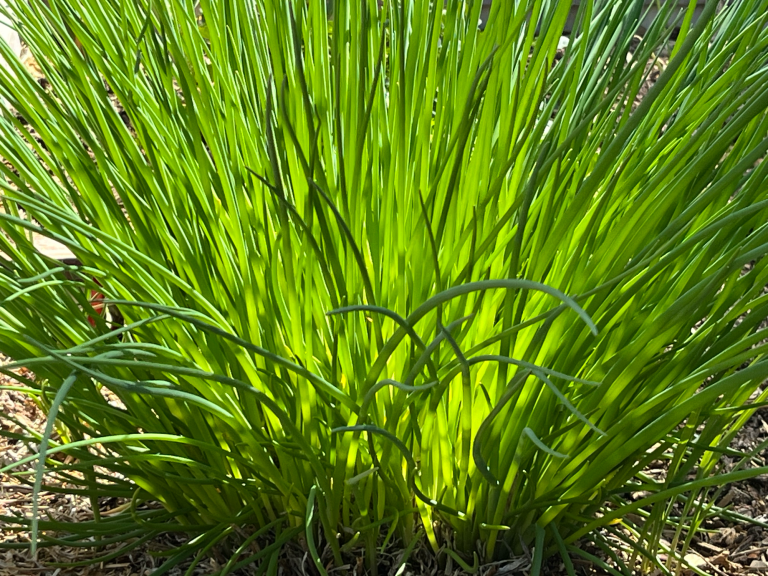
Why we care: Most condiments are condensed or fermented plants, adding powerful nutrition to food. Using condiments limit time spent cooking as well. Just break (veg), boil (seeds), and bake (breads), then add condiments to make simple foods taste even better.
There are condiments quite easy to craft at home, while others readily available and affordable. See chapter 38, page 645, in the Human Nature of Need and Feed for more on condiments.
coleSLAw Reinvented
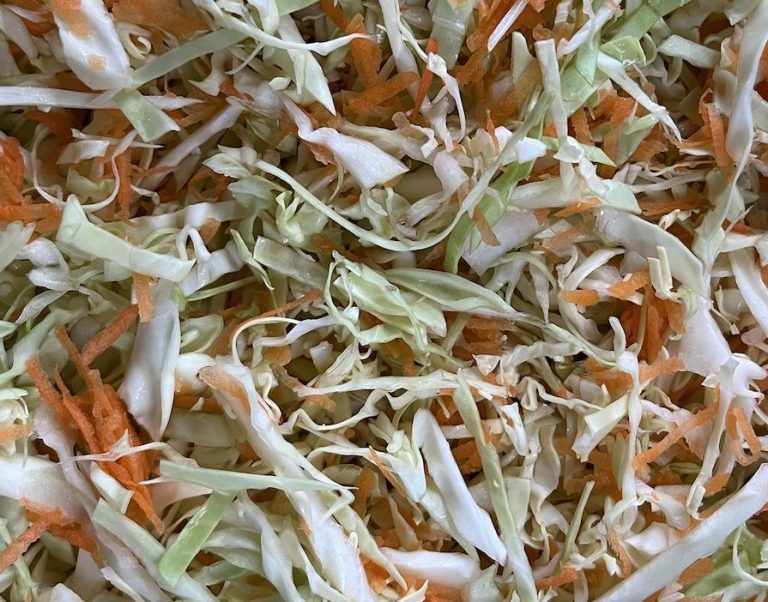
1 head of green cabbage
finely shredded
3-4 grated carrots
Options to add at serving:
diced onion
diced peppers
minced garlic
grated apple
Dressing to choose:
ranch dressing
favorite vinegrette
drizzle of walnut oil
squeeze of mustard
Toppers to choose:
sunflower seeds
toasted buckwheat
ground soy nuts
Cabbage is the cellar stored staple for wintertime fresh salad. Dressing the cabbage on the plate, as you would your favorite greens, allows the finely shredded cabbage and grated carrot to maintain their crunch for 7-10 days, refrigerated. Hold the onion, or add when serving to keep flavors fresh and preserve texture. Although predominately used for winter's raw veg in our home, topped with mustard, ranch dressing, and sunnyseeds, undressed prepared slaw is also at ready to top sandwiches and tacos; sauté with onions, garlic, mushrooms, and seasoned to stuff dumplings; steam with diced potatoes and/or winter squash for quick supper; add to favorite soups, or bowl-up for a super healthy snack. Mandoline the cabbage and box grate the carrots for preparation in a snap.
JOIN US
We need your consent to load the translations
We use a third-party service to translate the website content that may collect data about your activity. Please review the details in the privacy policy and accept the service to view the translations.